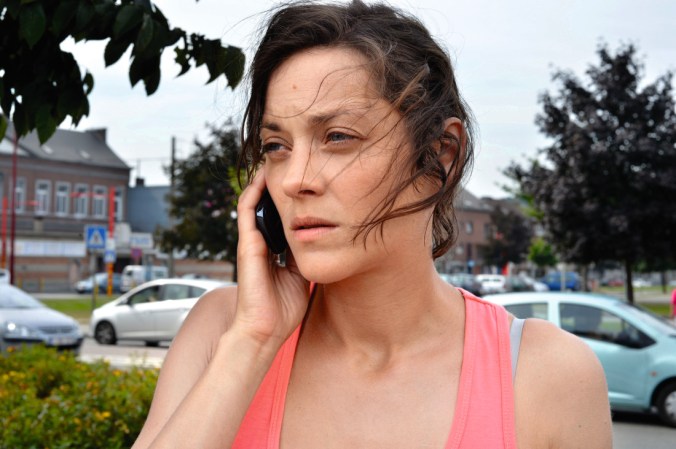
In the Dardenne Brothers’ 2014 film “Two Days One Night” (Deux jours, une nuit), we are treated to a very personal, gritty drama which speaks to some of the challenges working families face in the world of today. Sandra, played by Marion Cotillard is a wife and mother who works at Solwal, a solar energy company in Belgium. She suffers from depression and after recently enduring a nervous breakdown is about to return to work. During Sandra’s absence, there were discussions amongst management about her ongoing role at the firm. It was decided that her co-workers would vote whether the protagonist should remain employed or made redundant. The twist being that if the vote is in favour of Sandra staying, they lose an attractive financial bonus. The vote is to be taken on the coming Monday, Sandra’s first day back to work.
Drama
Au Revoir Les Enfants (1987)
In our ‘Year of Mercy’ series, Louis Malle’s autobiographical film, Au Revoir Les Enfants sets the bar high in portraying on celluloid a true and inspiring image of mercy. Set in Paris under Nazi occupation and concerning the daily lives of the boys at a Catholic boarding school, we are given fleeting glimpses of these larger world events as they slowly infiltrate the protective environment that the Carmelite brothers have tried to maintain for their students.
Yet, in the midst of great evil and suffering, there is great mercy…
Lola (1961) + The Umbrellas of Cherbourg (1964)
Two films from the fabulous Jacques Demy that take us on a journey from Nantes to Cherbourg, from simple black & white to vibrant colour, and from spoken dialogue to sung Musical. Both films create a magical world of beautiful people, and yet a world that is all too real beneath the surface. Demy builds his own cinematic universe inhabited by characters who cross into other films, as we experience here with his alter ego, Roland Cassard.
Roland bumps into his old childhood friend Lola, now a cabaret dancer, who awaits the return of her long-lost lover and the father of her child. Their lives are intertwined with Frankie, an American sailor, Madame Desnoyers and her daughter Cécile, as they each seek to fulfill their hearts’ desires.
In The Umbrellas of Cherbourg, Guy and Genevieve are young and in love, but must undergo a long separation when Guy is drafted into the Algerian War. Things are further complicated when Roland Cassard enters the scene… Demy utilises dazzling colours, and beautiful music (the whole film is sung) to tell this amazing story of love, disappointment, and redemption.
IN THIS POST
*Two Portraits of Longing and Love by Jacques Demy By A.A. Crayley
*Absence in Jacques Demy’s Lola and The Umbrellas of Cherbourg by Jeremy Ambrose
Leo McCarey in 1937
Make Way For Tomorrow & The Awful Truth
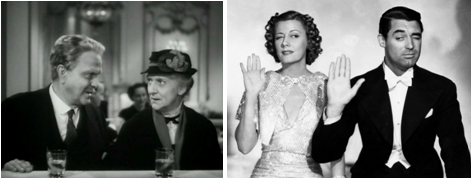
In the year 1937, Leo McCarey directed two films. One flopped and disappeared for seventy years. The other won him the Academy Award for Best Director. When receiving the Oscar, he said “Thanks but you’ve given it to me for the wrong film…” This double-header was a chance to see both films together and the cinema club audience unanimously agreed with McCarey; that while ‘The Awful Truth’ may be an entertaining comedy, it is ‘Make Way For Tomorrow’ that is the masterpiece! A film
about an elderly couple was never destined to do well at the box office, however, its power should not be underestimated, because by the time the last frame melts away, don’t be surprised if you feel like your heart has just been wrenched out of your body. It is a traumatic film, and yet a rich one, with vivid characters, pulsating with honest beauty. What does one do with the elderly when there is nowhere for them to go? What do their children do and at what cost? The film holds up a mirror to all those watching it where, although we may feel disgust at the behaviour of the grown-up children of the elderly couple, we also feel discomfort at the fact that we understand the children and even may identify with them. The film challenges us in a way that demands a response. It is a difficult challenge, one that most would prefer to ignore, but one that invites us to look into ourselves and what we believe in to hazard an answer.
The Awful Truth appears like fluff after such an experience, but this fluff won McCarey THE Academy Award. And it is rather impressive that a screwball comedy could affirm marriage through its depiction of the lead characters’ ‘divorce’. Witty, elegant, romantic, and funny, this seems the perfect definition for what “comedy” should be. Leo McCarey was a practicing Catholic who would later give us films like “Going My Way” and “An Affair to Remember,” but in these two films of 1937, we already see a master at telling great stories, be they comedy or tragedy, yet in both the ability to reflect themes crucial to building a culture of life.
Warning: The reflections below are full of spoilers. The aim is to share these insights with all who are inspired to watch these films and help to draw out even more from the experience. So watch the films first and read the reflections afterwards…
IN THIS POST
*Marriage in McCarey by Pablo Vila
*A Reflection on ‘Make Way For Tomorrow’ by Benard Chedid